The paper of "RNAi in the Rhizarian Phytopathogen Plasmodiophora brassicae :The Causal Agent of Clubroot Disease in Cruciferous Crops" has been published on Advanced Science. Congratulations!
Clubroot is a destructive disease of cruciferous crops caused by the protist Plasmodiophora brassicae. It has been reported in more than 80 countries worldwide, resulting in 10%–15% yield losses annually. Owing to the rapid virulence variation of P. brassicae, the resistance of existing resistant cultivars is readily overcome. Coupled with the lack of effective chemical control strategies, it is urgent to develop green control technologies for clubroot disease. Plasmodiophora brassicae belongs to Rhizaria, a group of eukaryotic organisms. The RNAi pathway of this clade has not been systematically characterized for a long time, which greatly restricts the application of RNAi technology in clubroot management.
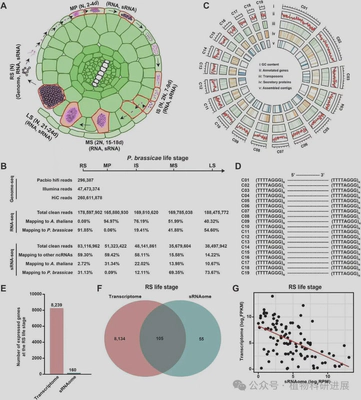
On September 6, 2026, the research article entitled RNAi in the Rhizarian Phytopathogen Plasmodiophora brassicae: The Causal Agent of Clubroot Disease in Cruciferous Crops by the research team led by Professor Lijiang Liu from the Institute of Oilseed Crops Research, Chinese Academy of Agricultural Sciences, was published online in Advanced Science. This study systematically characterized the non-canonical RNAi pathway of P. brassicae for the first time. It revealed that chitin components in the sporangial wall of P. brassicae zoospores can serve as an early control target. RNAi-mediated silencing of its synthase genes confers broad-spectrum resistance against multiple pathotypes of P. brassicae. These findings provide a novel theoretical foundation and technical strategy for clubroot disease management in cruciferous crops.
Full text article link: https://advanced.onlinelibrary.wiley.com/doi/10.1002/advs.202524028